Quick facts
| Category | Modules |
|---|---|
| Role | Control |
| Effect | Active ability can stun; allied units are excluded following the 0.9.10 fix. |
In-game view
Official Randwerk promotional screenshots from the press-kit archive. Release visuals may differ.
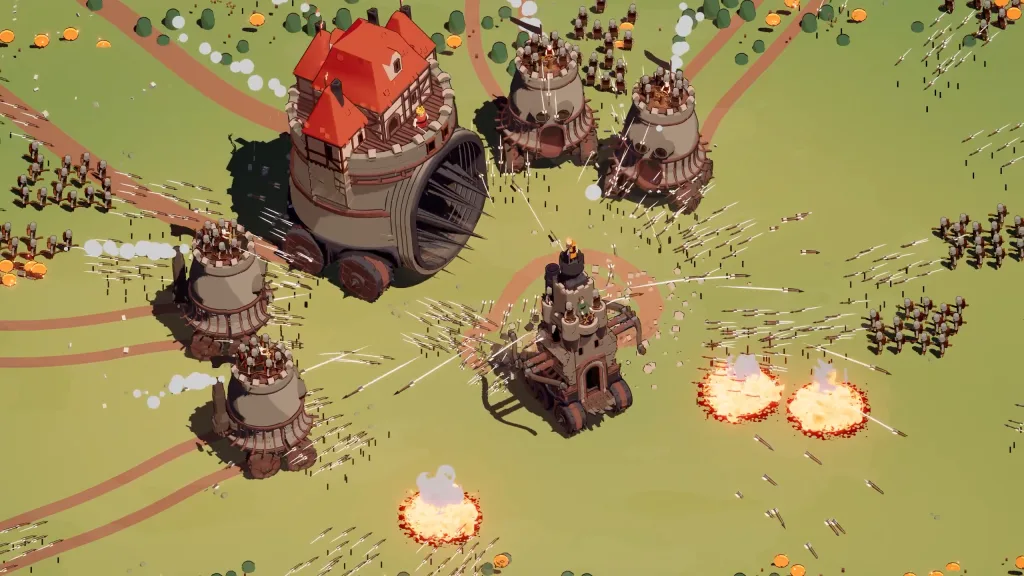
What Electric Mage does
Electric Mage has an active ability that can stun. Hotfix 0.9.10 fixed the action so that allied units are excluded from its stun effect. Its control role is distinct from an equipment choice evaluated only by outgoing damage.
Think about what you want to do after an interruption: continue an attack, change your line, or leave a crowded situation. The action becomes easier to evaluate when it serves a clear next decision.
Using control during an encounter
Guide advice: identify the target causing trouble and watch how it responds when you use the ability. Connect that observation to the next movement of the fortress. Control is most useful to your plan when you make use of the changed situation rather than remain in the same awkward position.
Keep the first experiment readable. Several overlapping enemies and attacks can make it difficult to understand which problem an action answered. Try to reduce competing threats through positioning before deciding whether a control choice fits your setup.
When to choose it
Consider Electric Mage when you want to explore interruption as part of a combat sequence. If an opponent repeatedly makes it difficult to continue your usual offense, a control-focused action offers another question to try besides increasing damage.
Choose by the actual problem, however. If incoming projectiles are the specific issue, compare Force Mage’s cancellation role. If you comfortably create opportunities but cannot capitalize on them, another offensive module may deserve attention first.
Strengths and limitations
Its defining strength is a stun-capable active action, giving a build a control function to plan around. The allied-unit fix also matters when revisiting older experiences of the module.
The practical limitation is assuming the same response from every target. Watch the opponent and keep an alternative route if the result differs from your expectation. Do not build an entire approach around remaining safe indefinitely after activation; readiness and the next movement decision still matter.
Build and captain considerations
Use Electric Mage alongside offense you understand so you can recognize whether the interruption improves your sequence. Ram is a useful comparison for how much the castle commits to an attack; Side Ballista is a comparison for a more active-focused offensive routine. These are planning relationships, not special combination effects.
With Huntress, consider the cooldown drawback before depending on repeated control opportunities. A captain rule that changes ability timing belongs in the same plan as the offensive action you expect to use during an opening.
Beginner advice and mistakes
Practice activation followed by a purposeful action. After watching the target respond, either use the opportunity or move to a safer line. This develops a sequence rather than a habit of pressing the ability simply because it is available.
Avoid treating control and projectile cancellation as identical. Avoid judging the action only by direct damage. If the intended target does not respond as expected, reposition and reassess instead of repeating a committed approach without learning from the result.
Patch notes
The top-mounted Electric Mage has a stun-capable active ability. Hotfix 0.9.10 corrected its ability to stun allied units.
Hotfix 0.9.10 →Electric Mage FAQ
What is Electric Mage’s role?
It provides control through a stun-capable active ability.
What changed in 0.9.10?
The ability was fixed so allied units are excluded from its stun effect.
How does it differ from Force Mage?
Electric Mage offers a stun action; Force Mage can cancel incoming projectiles. They answer different combat questions.
What should I do after using it?
As a practical approach, use the changed situation for your next attack or movement decision instead of assuming the action solves the whole encounter.