Quick facts
| Category | Modules |
|---|---|
| Role | Magic offense |
In-game view
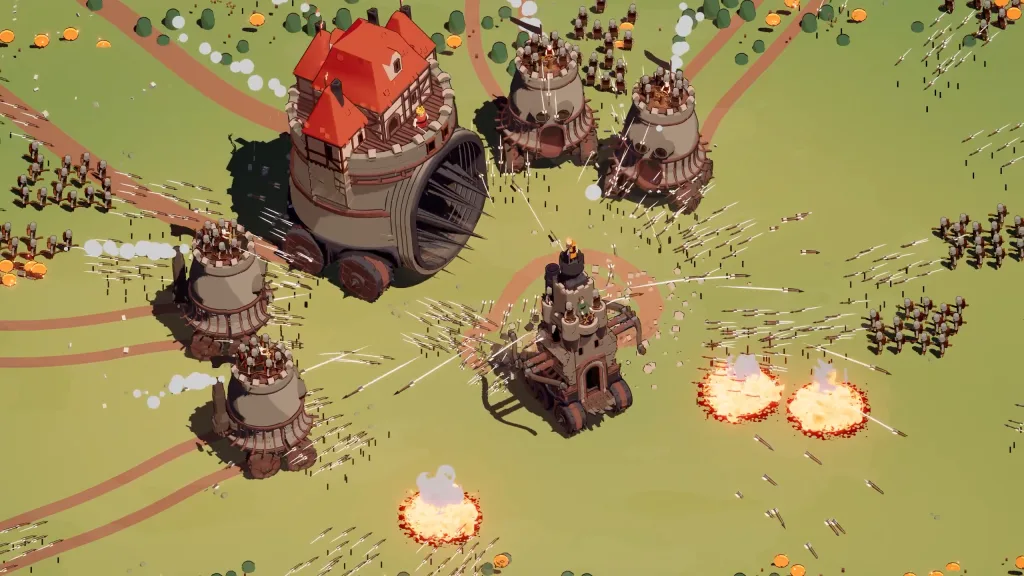
Official Randwerk promotional screenshots from the press-kit archive. Release visuals may differ.
What Fire Mage does
Fire Mage is associated with the Firestorm ability. The launch-day hotfix 0.9.6 increased Firestorm damage. This makes the action itself the useful starting point when learning the module or returning from an earlier version.
Keep the equipment’s offensive job in mind: what threat do you want the action to help remove, and when can you use it comfortably? Answering those questions gives the module a role in a build rather than treating magic as a complete strategy by itself.
Making Firestorm part of a sequence
Guide advice: use a familiar vehicle and create a manageable opportunity to activate the action. Watch what it contributes, then continue steering with the remaining threats in mind. An offensive action should fit into a repeatable approach and recovery sequence.
If the action looks impressive but you still lose control of the fight afterward, inspect the movement decision. You may need a different approach or another response to incoming attacks rather than a more elaborate offensive combination.
When to choose Fire Mage
Consider it when you want to try a magic-oriented action or compare a new offensive routine with the one you already know. The 0.9.6 damage change is a reason to revisit Firestorm if an older experience shaped your opinion.
Use the current run’s needs to decide whether that experiment makes sense now. If ordinary offense already works and the difficulty is surviving between attacks, an additional offensive choice may not address the problem. Keep the goal of the attempt clear.
Strengths and practical limitations
Firestorm provides an identifiable offensive action to build a learning exercise around. That is helpful when you want to understand one module at a time: use the action, observe the outcome, and adjust the next approach.
The practical limitation is assuming a fiery appearance supplies a complete interaction rule. When choosing an artifact, read which action its effect changes and what triggers it. Select for a condition your build actually meets, rather than pairing two names that merely sound related.
Build considerations and related modules
Top Mortar is a useful comparison for another projectile-based active offensive choice. Side Arm offers a comparison that includes both automatic attacks and an active action. Compare their contribution to the opportunities your vehicle can create.
Force Mage and Electric Mage answer different questions through projectile control and stun-capable control. Consider those roles when the setup needs more than offense. If you choose Huntress, include the cooldown drawback when thinking about how often an active plan can be repeated.
Beginner tips and common mistakes
Try Firestorm before adding several other unfamiliar effects. Keep the captain and vehicle familiar, use the action deliberately, and watch what remains dangerous afterward. This gives you a clearer reason to retain or change the module.
Avoid treating a damage increase as a guarantee of a universal best choice. Avoid assuming an artifact automatically strengthens Firestorm because its theme looks similar. When an approach fails, identify whether the action, its timing, or your movement caused the difficulty before changing the whole build.
Patch notes
A magic module associated with the Firestorm ability. The launch-day hotfix increased Firestorm damage.
Hotfix 0.9.6 →Fire Mage FAQ
Which ability is associated with Fire Mage?
Firestorm is its named offensive ability.
What changed in 0.9.6?
The launch-day hotfix increased Firestorm damage.
How should I choose artifacts around it?
Read the artifact’s trigger and affected action, then choose an effect your actual routine can use.
What is a good first test?
Use Firestorm on a familiar platform during a manageable encounter and evaluate both its contribution and the position left afterward.